
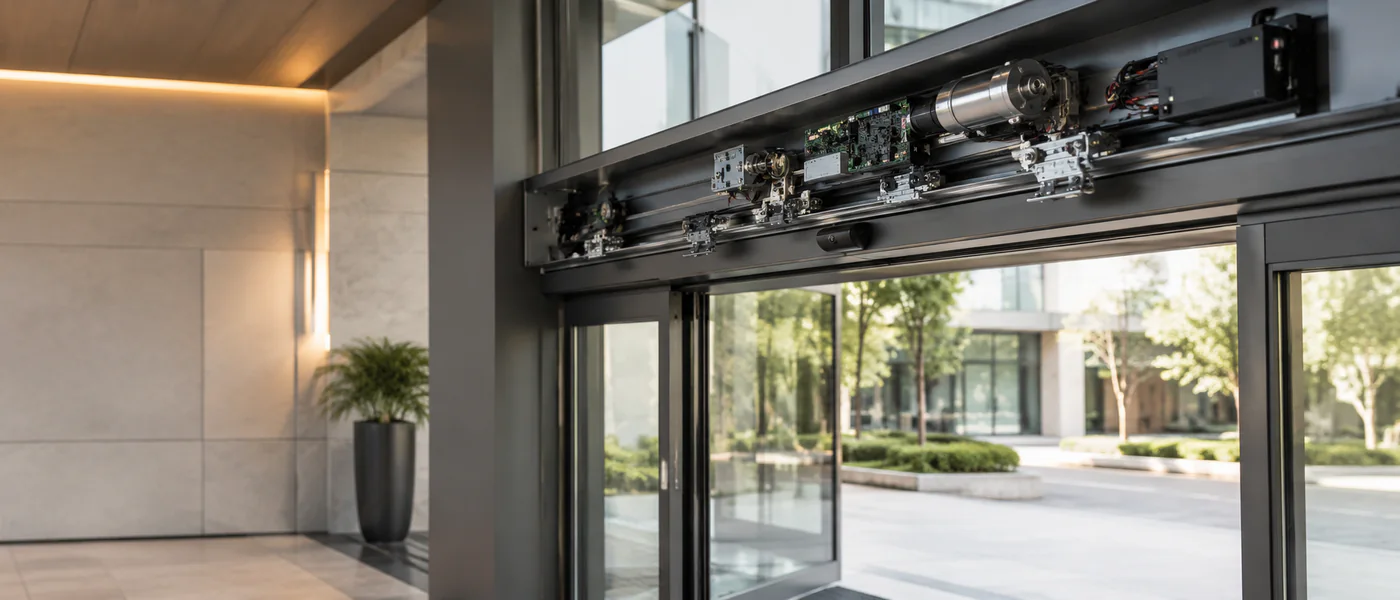
The door is slow, loud, or inconsistent
An automatic door that opens slowly, hesitates, vibrates, or makes new noise should be inspected. These symptoms can come from rollers, tracks, operator strain, failing parts, sensor settings, or a door that is no longer moving freely.
The earlier the issue is addressed, the more likely it is that a targeted repair can prevent a larger interruption. Waiting until the entrance stops completely often creates more disruption for customers, residents, guests, and staff.
The sensors do not behave predictably
Activation sensors and safety sensors control how the door responds to people near the opening. If the door opens when no one is nearby, fails to open for users, reverses unexpectedly, or stays open too long, the sensor system needs attention.
Sensor issues are especially important at public entrances, medical offices, retail stores, hotels, and condos where a wide range of users move through the entrance every day.
The door closes too hard or will not close
A door that closes with too much force, does not latch, or stays open can affect safety, energy performance, and building security. It may also point to operator settings, hardware wear, control problems, or mechanical binding.
Do not treat hard closing as normal aging. Automatic entrances interact directly with people, so closing behavior should be checked promptly.
Repair should include a maintenance recommendation
A professional repair should identify both the immediate problem and the reason it happened. If the entrance has heavy daily use, outdated components, or repeated sensor problems, preventive maintenance may be the smarter long-term move.
For commercial properties, keeping a service record helps managers understand whether the system is healthy, aging, or ready for modernization.
Miami Property Considerations
South Florida properties often deal with heavy daily traffic, humidity, coastal exposure, visitor access, parking flow, and high expectations from residents, guests, customers, and tenants. Any automatic door, gate, opener, or access control decision should consider how the system will be maintained after installation or repair.
For hotels, condos, HOAs, commercial buildings, retail stores, warehouses, medical offices, and luxury homes, the best access system is the one that supports daily use without creating new friction. That means planning safety devices, user credentials, visitor access, operator strength, sensor behavior, and future maintenance together.
Frequently Asked Questions
When should I call a professional about automatic door repair?
Call when the system affects safety, access, security, public entry, parking flow, or repeated daily use. Automatic systems combine mechanical, electrical, sensor, and access-control components, so guessing can create bigger problems.
Is preventive maintenance worth it?
For high-use gates, doors, parking systems, and access control, preventive maintenance is usually easier to plan than emergency downtime. It helps catch wear, misalignment, sensor problems, and access issues before they interrupt the property.
Need help with this system?
Request automatic door, gate, garage automation, access control, intercom, parking gate, maintenance, or repair support in Miami and South Florida.
Request a Free Estimate